How to apply Thinking, Fast and Slow
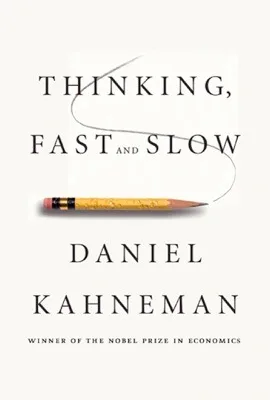
by Daniel Kahneman · 2011
MindSpiritKahneman showed that a confident answer often arrives before any thinking does. Here is a puzzle where that happens, then six ideas that leave you with questions.
A bat and a ball cost $1.10 together. The bat costs $1.00 more than the ball. How much is the ball? Answer before you work it out.
From the book
The book’s answer appears here.
Short summary
Thinking, Fast and Slow in brief
Kahneman describes two ways of thinking: a fast, automatic one that answers before you ask, and a slow, deliberate one that can check those answers but tires quickly and often doesn’t bother. Most of the book maps what slips through the gap. We swap a hard question for an easier one, lean on the first number we hear, trust a vivid story over how often things really happen, and weigh losses more heavily than equal gains. The practical lesson is modest and useful: the fast mind can’t be switched off, but you can learn which decisions deserve a slow second look.
Kahneman later wrote that he had placed too much faith in the underpowered priming studies he cited. A 2020 audit by Ulrich Schimmack argued that much of the book rests on shaky foundations.
Six ideas, in Kahneman’s order
Each idea is named and stated, not worked through. Under each is a question about your own day that no page can answer.
Two systems
Kahneman splits thinking into System 1, fast and automatic, and System 2, slow and effortful. System 2 is meant to check what System 1 offers, but its monitoring is lax, so much of the time it simply endorses the first answer.
Only your day can answer
Which choice today did you make before you’d finished thinking about it?
Jumping to conclusions
System 1 jumps to conclusions from whatever is in front of it. Kahneman calls the rule what you see is all there is: the mind builds its story from the facts at hand, rarely asks what is missing, and so feels surer than it should.
Only your day can answer
What did you decide this week that one more fact could have turned around?
Anchors
A number seen before an estimate pulls the estimate toward it, even when the number is plainly meaningless. In a study by Tversky and Kahneman, a wheel rigged to stop at 10 or 65 shifted people’s guesses, and experienced real-estate agents proved just as swayable.
Only your day can answer
Which number did you hear first this week that you’re still measuring things against?
The outside view
Kahneman’s own team once expected to finish a school textbook in about two years; it was done eight years later. His cure for this planning fallacy is the outside view: checking how long similar projects really took before trusting a plan.
Only your day can answer
How long did the last project like the one in front of you actually take?
Losses loom larger
With Amos Tversky, Kahneman found that a loss hurts more than a gain of the same size pleases. It helps explain why people cling to what they already own and turn down bets that favor them.
Only your day can answer
What are you keeping this week mostly because letting it go would feel like losing?
The two selves
The self that lives through an experience and the self that remembers it disagree. Kahneman shows that memory judges an experience mostly by its most intense moment and its ending, and largely ignores how long it lasted.
Only your day can answer
Which moment of today will you remember, and which one did you actually enjoy most?
The part no summary can do
Kahneman once said that after 25 years of studying his own errors of judgment, he hadn’t improved at all. Knowing the biases is the easy part; catching one in your own week is the part no page can do.
In Actium, Thinking, Fast and Slow becomes one chapter a day, in the order Kahneman wrote it, and each chapter becomes 2–3 small tasks written from your goals and your answers to up to five short questions. Two readers get different tasks, which is why yours aren’t on this page: they don’t exist yet.
Day 1 · when you start
Two quick tasks, starting with a short note
Day 2
Opens tomorrow morning.
Miss a day and your chapter simply waits.

Free to download · 15 days of everything, no card
Some features require a subscription · iPhone only
Read next
More books picked for “Boost intelligence”, and books that train the same stats.
- MindsetCarol S. DweckWhat did you last choose because you knew you’d ace it?
- RangeDavid EpsteinWhich task do you drift toward when nobody’s asking?
- A Short History of Nearly EverythingBill BrysonWhat changed this week in a view you pass every day?
- Deep WorkCal NewportWhen was your last full hour without a glance at messages?
Get Actium
Start Thinking, Fast and Slow in Actium
Pick Thinking, Fast and Slow in the app and answer up to five short questions about it and your life. Actium builds your first chapter while you watch, starting with a short note, and every task you finish adds points to Body, Mind, Soul or Spirit.
Free to download · 15 days of everything, no card
Some features require a subscription · iPhone only