How to apply The 7 Habits
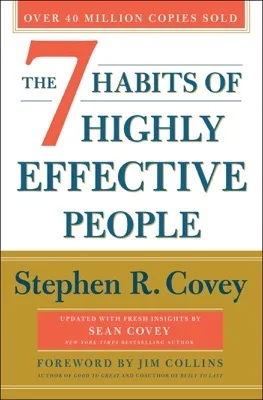
by Stephen R. Covey · 1989
MindSpiritCovey believed effectiveness grows out of character and how you see a situation, not out of technique. His ideas start on a subway ride that changed how he saw a stranger.
Looking back at this week, what used up most of your energy?
From the book · 6 ideas
Covey has a name for it.
Short summary
The 7 Habits in brief
Covey argues that lasting effectiveness rests on character rather than on techniques for managing impressions, and that change works from the inside out, starting with how you see things. The first three habits build self-mastery: owning your responses, deciding what your life should stand for, and putting important work ahead of merely urgent work. The next three are about working with others: looking for agreements where both sides gain, listening until the other person feels understood, and combining differences into solutions neither side had alone. The seventh, regular renewal of body, mind, heart and spirit, keeps the rest going, and the whole sequence starts with your own habits before anyone else’s.
The habits grew out of Covey’s doctoral study of American success literature since 1776 and his teaching at Brigham Young University; the book argues from principle and example.
Six ideas, in Covey’s order
Each idea is named and stated, not worked through. Under each is a question about your own day that no page can answer.
A paradigm shift
On a New York subway one Sunday, Covey asked a father to rein in his unruly children. The man said they had just come from the hospital, where their mother had died about an hour before, and Covey’s focus moved from the ride to helping.
Only your day can answer
Who annoyed you today before you knew anything about the day they were having?
Circle of Influence
Covey separates the Circle of Concern, things you have little or no control over, from the Circle of Influence, the things you can act on. Reactive people get stuck in the first; proactive people work in the second, and Covey argues their influence grows.
Only your day can answer
Of the things you grumbled about yesterday, which could you actually do something about?
The end in mind
Covey asks readers to picture their own funeral three years from today, with four speakers: one from family, a friend, a colleague and someone from a community they serve. What you would want them to say, he suggests, is the end to keep in mind.
Only your day can answer
Which hour of today would anyone speaking at your funeral think to mention?
Quadrant II
Covey sorts activities into four quadrants by urgency and importance. Crises and deadlines demand attention by themselves, while Quadrant II, important work that is not urgent, like planning, creative thinking and learning, waits quietly, and Covey argues most time belongs there.
Only your day can answer
Which important thing got pushed aside today by something that only felt urgent?
Empathic listening
When someone shares a problem, Covey observes, most of us reply from our own frame of reference: we evaluate, probe, advise or interpret. Those replies, he argues, keep us locked in our own autobiography, while listening with empathy is what lets people open up.
Only your day can answer
When someone last brought you a problem, how quickly did you start talking about yourself?
Sharpen the saw
Covey pictures someone worn out from sawing down a tree who refuses to pause and sharpen the blade because there is no time. Renewal in four dimensions, physical, mental, social and emotional, and spiritual, is what he says keeps the other habits working.
Only your day can answer
Which of body, mind, heart and spirit got nothing from you this week?
The part no summary can do
Covey’s quadrants explain why important work keeps losing to whatever is urgent. Which hour of your own week it loses, and what it loses to, shows up only on your own calendar.
In Actium, The 7 Habits becomes one chapter a day, in the order Covey wrote it, and each chapter becomes 2–3 small tasks written from your goals and your answers to up to five short questions. Two readers get different tasks, which is why yours aren’t on this page: they don’t exist yet.
Day 1 · when you start
Two quick tasks, starting with a short note
Day 2
Opens tomorrow morning.
Miss a day and your chapter simply waits.

Free to download · 15 days of everything, no card
Some features require a subscription · iPhone only
Read next
More books picked for “Have a successful career” and “Overall grow as a person”.
- Think and Grow RichNapoleon HillHow long did you keep at it after this week’s first no?
- So Good They Can’t Ignore YouCal NewportWhat did someone come to you for this week, and why you?
- The Lean StartupEric RiesWhat did someone actually do with your work this week?
- Man’s Search for MeaningViktor E. FranklWhat did today ask of you that no one else could give?

Get Actium
Start The 7 Habits in Actium
Pick The 7 Habits in the app and answer up to five short questions about it and your life. Actium builds your first chapter while you watch, starting with a short note, and every task you finish adds points to Body, Mind, Soul or Spirit.
Free to download · 15 days of everything, no card
Some features require a subscription · iPhone only