How to apply Think and Grow Rich
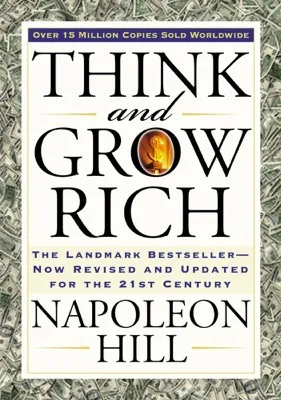
by Napoleon Hill · 1937
MindSpiritHill argued that riches begin as a definite thought, held until it becomes a plan. From burning desire to the ghosts of fear, and the goal of yours that is still only a wish.
What held back the goal you care most about this week?
From the book · 6 ideas
Hill has a name for it.
Short summary
Think and Grow Rich in brief
Hill argues that every fortune starts as a thought: a desire made definite, believed in and repeated until it reaches the subconscious and turns into plans. He sets out thirteen steps to riches, most of them habits of mind, including the Master Mind, an alliance of people working in harmony toward one aim. Published in 1937, during the Depression, the book leans on stories of men such as Ford, Edison and Carnegie, and it closes on six basic fears that, Hill says, must be cleared before any of it works. In Hill’s telling, a vague wish goes nowhere, while a specific aim, repeated and shared with the right people, begins to shape what you do.
Hill said Andrew Carnegie set him this task in 1908, but Carnegie’s biographer David Nasaw found no evidence the two ever met, and outside Hill’s own writings there is little evidence of his other famous interviews.
Six ideas, in Hill’s order
Each idea is named and stated, not worked through. Under each is a question about your own day that no page can answer.
Burning desire
Hill argues that riches start with a desire definite enough to carry an exact amount and a date. His model is Edwin C. Barnes, who stepped off a freight train set on becoming Edison’s business associate and then waited five years for his chance.
Only your day can answer
Which goal did you mention this week without a number or a date attached to it?
Autosuggestion
Hill calls autosuggestion the gate between conscious thought and the subconscious: whatever thoughts you let dominate, hopeful or fearful, get through. Plain words repeated by rote do nothing, he insists, unless they carry real feeling and belief.
Only your day can answer
What sentence about yourself did your own head repeat most often today?
Specialized knowledge
For Hill, knowledge pays only once it is organized into plans aimed at a definite end. He retells Henry Ford’s libel suit against a Chicago newspaper, where lawyers quizzed Ford on history to prove him ignorant and he replied that a button could summon experts.
Only your day can answer
Whose five minutes could have saved you the hours you spent puzzling alone this week?
Persistence
Hill treats persistence as a state of mind that can be cultivated, through a definite purpose, a plan in continuous action and a mind closed to discouragement. Its absence shows, he says, in alibis, procrastination and eagerness to quit at the first defeat.
Only your day can answer
After the first no you heard this week, how much longer did you keep at it?
The Master Mind
Hill defines the Master Mind as two or more people coordinating knowledge and effort in harmony toward a definite purpose. He credits Carnegie’s fortune to such a group of about fifty men, and claims that minds working together form something like a third mind.
Only your day can answer
Of the people you spoke with this week, who left your main aim stronger than before?
Six ghosts of fear
The book closes on six basic fears: of poverty, criticism, ill health, losing someone’s love, old age and death. Hill argues that they start as indecision, harden into doubt and grow unnoticed, and that fear of criticism robs people of initiative and imagination.
Only your day can answer
Whose imagined reaction kept you quiet the last time you had an idea worth saying?
The part no summary can do
Hill argued that a definite aim pulls effort toward it and that fear passes itself off as caution. Where your own aim stays vague, and whose voice talks you out of it, is a thing he could not have known.
In Actium, Think and Grow Rich becomes one chapter a day, in the order Hill wrote it, and each chapter becomes 2–3 small tasks written from your goals and your answers to up to five short questions. Two readers get different tasks, which is why yours aren’t on this page: they don’t exist yet.
Day 1 · when you start
Two quick tasks, starting with a short note
Day 2
Opens tomorrow morning.
Miss a day and your chapter simply waits.

Free to download · 15 days of everything, no card
Some features require a subscription · iPhone only
Read next
More books picked for “Have a successful career”, and books that train the same stats.
- The 7 Habits of Highly Effective PeopleStephen R. CoveyWhat got bumped today by something that only felt urgent?
- So Good They Can’t Ignore YouCal NewportWhat did someone come to you for this week, and why you?
- The Lean StartupEric RiesWhat did someone actually do with your work this week?
- The One ThingGary Keller and Jay PapasanWhat decided which task came first this morning?
Get Actium
Start Think and Grow Rich in Actium
Pick Think and Grow Rich in the app and answer up to five short questions about it and your life. Actium builds your first chapter while you watch, starting with a short note, and every task you finish adds points to Body, Mind, Soul or Spirit.
Free to download · 15 days of everything, no card
Some features require a subscription · iPhone only