How to apply So Good They Can’t Ignore You
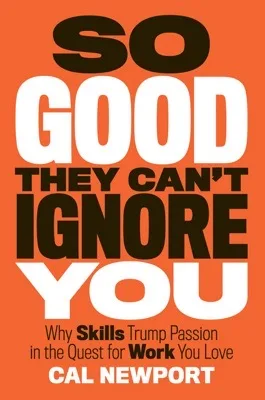
by Cal Newport · 2012
MindSpiritLoving your work, Newport argues, usually follows getting good at it, not the other way round. From career capital to little bets, and what people actually come to you for.
When work felt most off this week, what was closest to the reason?
From the book · 6 ideas
Newport has a name for it.
Short summary
So Good They Can’t Ignore You in brief
Newport argues that the familiar advice to follow your passion gets careers backwards: most people have no clear passion waiting to be matched to a job, and expecting one breeds job-hopping and anxiety. He set out to meet people who love their work, from an organic farmer to a Harvard professor, and found that their passion mostly grew after they got good at something rare and valuable. He calls those skills career capital and shows them being traded for what makes work satisfying, above all control over what you do and a mission that gives it direction. The shift he argues for is from asking what a job should give you to asking what you can offer.
Newport builds the case mostly from interviews and career profiles, plus some scientific research. It is an argument from examples, not one tested finding.
Six ideas, in Newport’s order
Each idea is named and stated, not worked through. Under each is a question about your own day that no page can answer.
The passion hypothesis
Newport’s target is the passion hypothesis: the belief that you should find your passion first, then a job to match it. He opens with Steve Jobs’s Stanford speech urging graduates to chase their dreams, then shows Apple began as a small-time scheme that took off.
Only your day can answer
When did work this week make you wonder whether it’s the wrong job, and what had just happened?
The craftsman mindset
Newport contrasts the passion mindset, which asks what work can offer you, with the craftsman mindset, which asks what you can offer, and argues the second is what leads to loving the work. His title quotes Steve Martin’s answer when asked about his success.
Only your day can answer
Apart from your time, what did someone actually get from your work today?
Career capital
The traits that make work great, such as creativity, impact and control, are rare and valuable, Newport argues, so getting them takes rare and valuable skills to offer in return. He calls those skills career capital, and passion tends to follow the trade.
Only your day can answer
What did someone come to you for this week that they couldn’t easily get elsewhere?
Deliberate practice
Newport borrows Anders Ericsson’s deliberate practice: skill grows from work just past what you can already do, with honest feedback. Most people improve until they are acceptable and stop there; the stretch is uncomfortable, a strain Newport says feels almost physical.
Only your day can answer
What was the hardest thing you tried at work today, and who told you how it went?
The control traps
Control over your work, Newport argues, is among the most valuable traits a career offers, and among the costliest. Grabbing it without career capital is his first control trap; his test for a bold move is whether people will pay you for it.
Only your day can answer
Which hour of your work this week ran entirely on someone else’s choices?
Little bets toward a mission
A career mission, Newport argues, only comes into view at the cutting edge of a field, in the adjacent possible, so it needs career capital first. It then advances through little bets: small projects that return clear feedback within months.
Only your day can answer
What was the last small project you finished and showed someone, and what came back?
The part no summary can do
Newport can show why skill tends to come before passion. Which of your skills people actually rely on, and where you quietly stopped getting better, is something your own week keeps a record of.
In Actium, So Good They Can’t Ignore You becomes one chapter a day, in the order Newport wrote it, and each chapter becomes 2–3 small tasks written from your goals and your answers to up to five short questions. Two readers get different tasks, which is why yours aren’t on this page: they don’t exist yet.
Day 1 · when you start
Two quick tasks, starting with a short note
Day 2
Opens tomorrow morning.
Miss a day and your chapter simply waits.

Free to download · 15 days of everything, no card
Some features require a subscription · iPhone only
About Cal Newport
- Born1982
- First published2012
- Also wroteDeep Work (2016), Digital Minimalism (2019), Slow Productivity (2024)
Read next
More books picked for “Have a successful career”, and books that train the same stats.
- Think and Grow RichNapoleon HillHow long did you keep at it after this week’s first no?
- The 7 Habits of Highly Effective PeopleStephen R. CoveyWhat got bumped today by something that only felt urgent?
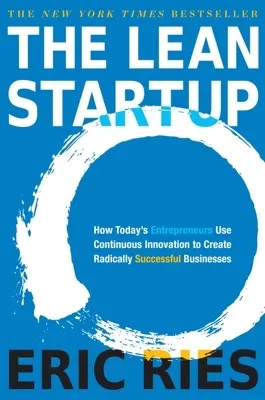
- The Lean StartupEric RiesWhat did someone actually do with your work this week?
- The One ThingGary Keller and Jay PapasanWhat decided which task came first this morning?

Get Actium
Start So Good They Can’t Ignore You in Actium
Pick So Good They Can’t Ignore You in the app and answer up to five short questions about it and your life. Actium builds your first chapter while you watch, starting with a short note, and every task you finish adds points to Body, Mind, Soul or Spirit.
Free to download · 15 days of everything, no card
Some features require a subscription · iPhone only