How to apply Nonviolent Communication
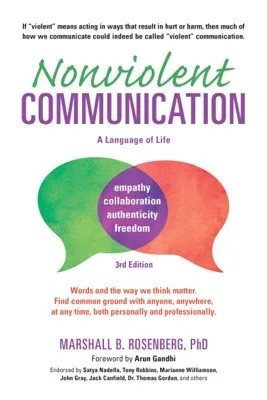
by Marshall B. Rosenberg · 1999
MindSoulRosenberg argued that most quarrels run on judgments, and that under each judgment sits a need nobody has named. His ideas, and the needs under your own sharpest words.
Your last conversation that went worse than you hoped: where did it turn?
From the book · 6 ideas
Rosenberg has a name for it.
Short summary
Nonviolent Communication in brief
Rosenberg argues that much of the hurt in ordinary conversation comes from a language most of us learn young: labeling people, comparing them, blaming them for our feelings and making demands. In its place he offers four components: what you observed, kept apart from any verdict; what you feel; the need behind that feeling; and a concrete request the other person is free to refuse. The same four work in reverse when you listen, as an ear for the feelings and needs inside someone else’s words. The upshot, as he tells it, is that people resist what sounds like criticism but can respond to a need they hear.
Rosenberg makes his case through stories, examples and role-plays rather than studies. Later evaluations of NVC training, in health care, schools and prisons, are relatively few and often small.
Six ideas, in Rosenberg’s order
Each idea is named and stated, not worked through. Under each is a question about your own day that no page can answer.
Life-alienating communication
Rosenberg’s name for judging, comparing, denying responsibility and demanding. In his own example, a partner who wants more affection than he gives is needy, and one who gives less than he wants is aloof. Each verdict, he argues, voices his own need.
Only your day can answer
Behind the name you called someone in your head today, what were you wanting from them?
Observing without evaluating
Rosenberg separates what anyone could see or hear from what we make of it. When the two arrive mixed together, he argues, the other person hears criticism and resists what is being said.
Only your day can answer
The last time you told someone they always or never do something, what had they actually done?
Feelings rooted in needs
Rosenberg holds that what others do may stir a feeling but never causes it: the feeling comes from a need of ours being met or not. Words like ignored or misunderstood, in his view, describe what we think others did, not what we feel.
Only your day can answer
Which feeling did you name today, like ignored or let down, that was really a charge against someone?
Requests, not demands
For Rosenberg, a request is defined by what happens after a no. If refusing brings blame or punishment, open or implied, it was a demand. His own children, he writes, taught him he could never make them do anything.
Only your day can answer
The last time someone turned you down this week, what did your very next sentence sound like?
Receiving empathically
On the listening side, Rosenberg asks for presence more than analysis: hearing the feelings and needs inside whatever someone says. Trying to work the other person out in your head, he has said, means you are not present with them.
Only your day can answer
When someone complained to you this week, how many sentences in did you start fixing it?
Expressing anger fully
Rosenberg places the cause of anger in our thinking, in thoughts of blame and judgment, not in what the other person did. In his reading, anger signals that we have lost touch with a need of our own.
Only your day can answer
Just before you last snapped at someone, what sentence about them was already running in your head?
The part no summary can do
Rosenberg can lay out the four components and the words that block them. Which need sat under the last thing you judged, snapped or demanded, you can only find by going back to that moment.
In Actium, Nonviolent Communication becomes one chapter a day, in the order Rosenberg wrote it, and each chapter becomes 2–3 small tasks written from your goals and your answers to up to five short questions. Two readers get different tasks, which is why yours aren’t on this page: they don’t exist yet.
Day 1 · when you start
Two quick tasks, starting with a short note
Day 2
Opens tomorrow morning.
Miss a day and your chapter simply waits.

Free to download · 15 days of everything, no card
Some features require a subscription · iPhone only
Read next
More books picked for “Develop healthy relationships”, and books that train the same stats.
- AttachedAmir Levine and Rachel S. F. HellerWhat did you do the last time a reply came late?
- The Five Love LanguagesGary ChapmanWhich kindness of yours went unnoticed this week?
- Hold Me TightSue JohnsonWho pushed and who went quiet in your last argument?
- The Subtle Art of Not Giving a F*ckMark MansonWhat took your attention yesterday that deserved none?


Get Actium
Start Nonviolent Communication in Actium
Pick Nonviolent Communication in the app and answer up to five short questions about it and your life. Actium builds your first chapter while you watch, starting with a short note, and every task you finish adds points to Body, Mind, Soul or Spirit.
Free to download · 15 days of everything, no card
Some features require a subscription · iPhone only