How to apply Attached
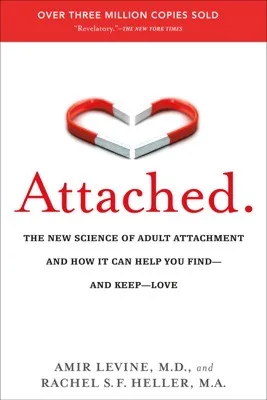
by Amir Levine and Rachel S. F. Heller · 2010
MindSoulLevine and Heller sort adults into three attachment styles and argue that knowing yours, and a partner’s, explains a lot. Their ideas run from protest behavior to plain asking.
The last time someone close went a little quiet on you, what did you do?
From the book · 6 ideas
Levine and Heller have a name for it.
Short summary
Attached in brief
Levine and Heller carry attachment theory, pioneered by John Bowlby in the 1950s to explain children’s bonds with their caregivers, into dating and long relationships. They argue that adults relate to partners in one of three styles: secure people are comfortable with closeness, anxious people crave it and worry that a partner won’t love them back, and avoidant people equate it with a loss of independence. In their account, needing a partner is built in rather than a weakness, and many painful relationships are clashes between styles, above all anxious with avoidant. Their bottom line: knowing your own style, and spotting a partner’s early, changes who you choose and how you ask for what you need.
The three styles rest on decades of attachment research. Levine’s own site now describes attachment as two sliding scales, anxiety and avoidance, that can shift between relationships, not fixed types.
Six ideas, in Levine and Heller’s order
Each idea is named and stated, not worked through. Under each is a question about your own day that no page can answer.
Protest behavior
Levine and Heller describe an attachment system that keeps us close to the people we depend on. When a partner seems out of reach, it sets off protest behavior, from calling again and again to trying to make them jealous.
Only your day can answer
What did you do the last time someone close took longer than usual to reply?
The dependency paradox
Levine and Heller push back on the idea that needing a partner is a weakness. In what researchers call the dependency paradox, people who can truly rely on a partner become more independent and creative, not less, because someone has their back.
Only your day can answer
What did you go without this week rather than ask for it and risk seeming needy?
A sensitive attachment system
Anxious people, as Levine and Heller describe them, want a lot of closeness and often fear that a partner wants less. They can be very sensitive to small shifts in a partner’s mood, so even a flat tone can read as a warning.
Only your day can answer
Whose small change of tone did you catch this week, and what did you decide it meant?
Deactivating strategies
Avoidant people want closeness too, Levine and Heller write, but they keep it in check with deactivating strategies: fixing on a partner’s small flaws, idealizing an ex, or pulling away just when things are going well.
Only your day can answer
When someone got closer to you this week, which of their small flaws suddenly stood out?
The anxious-avoidant trap
Anxious people keep meeting avoidant ones, partly because avoidant people return to dating more often. Once together, Levine and Heller show, each confirms the other’s fear: pursuit looks needy to one, and distance looks like scarcity to the other.
Only your day can answer
When someone close moved toward or away from you this week, what fear did it seem to confirm?
Effective communication
In the book’s last part, Levine and Heller make the case for stating needs plainly and early instead of playing games. A partner’s reply is useful either way, because it shows how well they can meet those needs.
Only your day can answer
Where this week did you drop a hint instead of asking, and what came of it?
The part no summary can do
Levine and Heller can explain what protest behavior is and where it comes from. What you actually do in the hour after a message goes unanswered, you only find out the next time it happens.
In Actium, Attached becomes one chapter a day, in the order Levine and Heller wrote it, and each chapter becomes 2–3 small tasks written from your goals and your answers to up to five short questions. Two readers get different tasks, which is why yours aren’t on this page: they don’t exist yet.
Day 1 · when you start
Two quick tasks, starting with a short note
Day 2
Opens tomorrow morning.
Miss a day and your chapter simply waits.

Free to download · 15 days of everything, no card
Some features require a subscription · iPhone only
Read next
More books picked for “Develop healthy relationships”, and books that train the same stats.
- The Five Love LanguagesGary ChapmanWhich kindness of yours went unnoticed this week?
- Nonviolent CommunicationMarshall B. RosenbergWhat did you want from the last person you judged?
- Hold Me TightSue JohnsonWho pushed and who went quiet in your last argument?
- The Subtle Art of Not Giving a F*ckMark MansonWhat took your attention yesterday that deserved none?

Get Actium
Start Attached in Actium
Pick Attached in the app and answer up to five short questions about it and your life. Actium builds your first chapter while you watch, starting with a short note, and every task you finish adds points to Body, Mind, Soul or Spirit.
Free to download · 15 days of everything, no card
Some features require a subscription · iPhone only