How to apply The Subtle Art
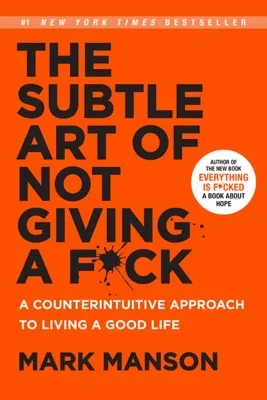
by Mark Manson · 2016
MindSoulA good life, in Manson’s telling, means caring about fewer things and choosing them on purpose. Six of his ideas, from Disappointment Panda to the do-something principle.
What got between you and something you meant to do this week?
From the book · 6 ideas
Manson has a name for it.
Short summary
The Subtle Art in brief
Manson argues against the self-help promise that you can feel positive all the time. Problems never run out, in his view, so the real question is which ones are worth having. His alternative is to stop minding life’s unimportant imperfections and save your care for the few things that truly matter, chosen on purpose. The book moves from values and responsibility through doubt, failure and rejection to death, with stories from his own life along the way. What it asks of readers is noticing where their attention and worry actually go, and whether those things deserve them.
Manson makes his case through many stories from his own life and through writers he draws on, among them Charles Bukowski, whose philosophy names the first chapter, and Alan Watts.
Six ideas, in Manson’s order
Each idea is named and stated, not worked through. Under each is a question about your own day that no page can answer.
The feedback loop from hell
Manson describes how a bad feeling feeds on itself: you get anxious, then anxious about being anxious, or angry and then angry at yourself for it. He blames consumer culture and show-off social media for teaching us that feeling bad is unacceptable.
Only your day can answer
When something annoyed you today, what did you feel next about being annoyed?
Disappointment Panda
Manson invents Disappointment Panda, his own kind of superhero, for a chapter arguing that happiness is itself a problem. Problems never go away, he says; they only get swapped for better ones, and happiness comes from solving them, not from having none.
Only your day can answer
Which problem on your plate right now is there only because you got something you wanted?
Good and bad values
Manson calls values the measuring sticks we use to judge whether a life is going well. Good ones, such as honesty or curiosity, rest on reality and stay in your control; bad ones, such as needing to be liked by everybody, do not.
Only your day can answer
The last time you felt behind today, what were you measuring yourself against?
The responsibility/fault fallacy
Manson separates fault, which belongs to choices already made, from responsibility, which belongs to the choices you make now. If a baby were left on your doorstep, he notes, it wouldn’t be your fault, but what happens next would be your responsibility.
Only your day can answer
Whose fault was the worst part of this week, and whose move is it now?
Manson’s law of avoidance
Manson’s law of avoidance says people steer away from whatever threatens their sense of who they are, and the bigger the threat, the harder they steer. It covers good things too: people also dodge success or love that would unsettle who they think they are.
Only your day can answer
What did you steer around this week that might have changed how you see yourself?
The do-something principle
Manson flips the usual order in which feeling motivated leads to action. In his do-something principle, action comes first, and even a small step tends to bring the inspiration, and then the motivation, to keep going.
Only your day can answer
How did you feel ten minutes into the task you’d dodged longest this week?
The part no summary can do
Manson can argue that everyone has only so much care to spend. Where yours actually went this week, and whether it was worth it, is a ledger only you can read.
In Actium, The Subtle Art becomes one chapter a day, in the order Manson wrote it, and each chapter becomes 2–3 small tasks written from your goals and your answers to up to five short questions. Two readers get different tasks, which is why yours aren’t on this page: they don’t exist yet.
Day 1 · when you start
Two quick tasks, starting with a short note
Day 2
Opens tomorrow morning.
Miss a day and your chapter simply waits.

Free to download · 15 days of everything, no card
Some features require a subscription · iPhone only
Read next
More books picked for “Become confident”, and books that train the same stats.
- The Confidence CodeKatty Kay and Claire ShipmanWhat did you hold off on this week until you felt ready?
- Daring GreatlyBrené BrownWhat did you leave unsaid this week to avoid looking weak?
- You Are a BadassJen SinceroWhich old belief about yourself made a call today?
- How to Talk So Kids Will Listen & Listen So Kids Will TalkAdele Faber and Elaine MazlishWhat did you say the third time you asked your kid today?
Get Actium
Start The Subtle Art in Actium
Pick The Subtle Art in the app and answer up to five short questions about it and your life. Actium builds your first chapter while you watch, starting with a short note, and every task you finish adds points to Body, Mind, Soul or Spirit.
Free to download · 15 days of everything, no card
Some features require a subscription · iPhone only