How to apply The Confidence Code
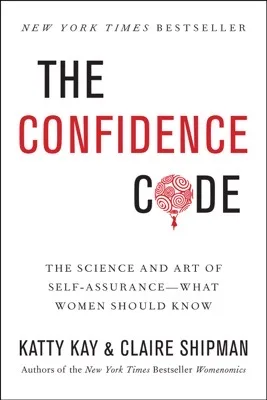
by Katty Kay and Claire Shipman · 2014
MindSpiritKay and Shipman came to see confidence as less a feeling than a habit of acting before you feel ready. Five ideas, and the small moments this week when you held back.
The last time this week you held back from speaking up or putting yourself forward, what was the real reason?
From the book · 5 ideas
Kay and Shipman have a name for it.
Short summary
The Confidence Code in brief
Kay and Shipman, two television journalists, set out to explain why so many accomplished women they met doubted they were ready for the next step while their male colleagues pushed forward. They argue that confidence, not just competence, decides who gets ahead, and that it shows up in what people do more than in how they feel. Drawing on interviews and on research in genetics and neuroscience, they conclude that genes shape only part of it, while habits such as perfectionism, people-pleasing and replaying old mistakes drain the rest. In their account, confidence grows from action, small risks and quick recoveries from failure, not from positive thinking or borrowed bravado.
Kay and Shipman are journalists, not researchers: they build their case from interviews with women leaders and from other people’s studies in psychology, genetics and neuroscience.
Five ideas, in Kay and Shipman’s order
Each idea is named and stated, not worked through. Under each is a question about your own day that no page can answer.
Competence isn’t enough
In conversations with successful women, Kay and Shipman kept hearing that they didn’t feel ready for promotion. Many assumed that steady hard work, without making waves, would be noticed and rewarded in time, and the authors argue that competence alone rarely is.
Only your day can answer
What good work of yours is still waiting for someone to notice it unprompted?
Do more, think less
Kay and Shipman describe confidence less as a feeling than as a readiness to act. In their account it grows by doing things and courting risk, while long deliberation, the analysis paralysis they warn about, keeps it small.
Only your day can answer
How long did you keep turning over your last decision after you already knew the answer?
Wired for confidence
The authors visit a researcher who studies anxiety in rhesus monkeys and go looking for a confidence gene. Their conclusion is that genes set part of the starting point, but confidence is not fixed, because the brain keeps rewiring with what we do.
Only your day can answer
What did you handle calmly today that would have rattled you a few years ago?
Perfectionism and people-pleasing
Kay and Shipman trace much of the gap to habits many women learn early: aiming for perfection, holding back so as not to seem pushy, and dwelling on past mistakes. Each feels like diligence, they argue, yet each keeps capable people quiet.
Only your day can answer
What did you take out of an email or a meeting this week so you wouldn’t sound pushy?
Failing fast
Kay and Shipman argue for more action, more risk and quicker failure, and for reading a setback as part of progress rather than a verdict on ability. Waiting until success feels certain, in their account, is how confidence stays small.
Only your day can answer
Where did fear of failing in front of people keep you out of something this week?
The part no summary can do
Kay and Shipman can show you where the confidence gap comes from and why acting builds confidence. Where you hold back, and what happens the next time you don’t, is the part only your own week holds.
In Actium, The Confidence Code becomes one chapter a day, in the order Kay and Shipman wrote it, and each chapter becomes 2–3 small tasks written from your goals and your answers to up to five short questions. Two readers get different tasks, which is why yours aren’t on this page: they don’t exist yet.
Day 1 · when you start
Two quick tasks, starting with a short note
Day 2
Opens tomorrow morning.
Miss a day and your chapter simply waits.

Free to download · 15 days of everything, no card
Some features require a subscription · iPhone only
Read next
More books picked for “Become confident”, and books that train the same stats.
- Daring GreatlyBrené BrownWhat did you leave unsaid this week to avoid looking weak?
- The Subtle Art of Not Giving a F*ckMark MansonWhat took your attention yesterday that deserved none?
- You Are a BadassJen SinceroWhich old belief about yourself made a call today?
- The 7 Habits of Highly Effective PeopleStephen R. CoveyWhat got bumped today by something that only felt urgent?
Get Actium
Start The Confidence Code in Actium
Pick The Confidence Code in the app and answer up to five short questions about it and your life. Actium builds your first chapter while you watch, starting with a short note, and every task you finish adds points to Body, Mind, Soul or Spirit.
Free to download · 15 days of everything, no card
Some features require a subscription · iPhone only