How to apply Hold Me Tight
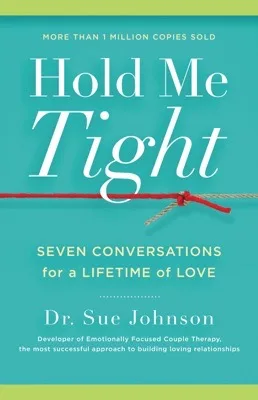
by Sue Johnson · 2008
SoulSpiritUnder most fights between partners, as Johnson sees it, sits one worry: whether the other one is really there. Her ideas map a dance your own arguments may know by heart.
When you and someone close last fell out of step, what was it like?
From the book · 6 ideas
Johnson has a name for it.
Short summary
Hold Me Tight in brief
Johnson argues that adult love is an attachment bond, the same wired-in need for a safe, responsive other that keeps a baby close to a parent, and that depending on a partner is a strength rather than a weakness. In her view most fights are not really about chores or power but protests against emotional disconnection, which panic hardens into patterns that repeat. The book brings her couple therapy to general readers as seven conversations, from spotting those patterns to forgiving injuries and keeping the bond alive. Her claim is that couples are steadied less by problem-solving skills than by each partner learning to reach out, and to answer, when the other feels alone.
The book rests on attachment research and on trials of Emotionally Focused Therapy, mostly run by its own practitioners. James Coyne called some of them underpowered and at high risk of bias, a flaw common in the field.
Six ideas, in Johnson’s order
Each idea is named and stated, not worked through. Under each is a question about your own day that no page can answer.
Accessible, responsive, engaged
Johnson treats adult love as an attachment bond and says its safety comes down to three qualities she sums up as A.R.E.: being accessible, responsive and engaged. Under most fights, she argues, sits one question about the other person: are you there for me?
Only your day can answer
The last time someone close reached for your attention today, how long did it take you to turn?
The Demon Dialogues
Johnson names three patterns couples fall into once they feel disconnected: Find the Bad Guy, where both blame; the Protest Polka, where one partner demands and the other withdraws, the most common; and Freeze and Flee, where both shut down.
Only your day can answer
In your most recent disagreement, who pushed for a response and who went quiet first?
Raw spots
Beneath the sudden, impulsive reactions that set a demon dialogue going, Johnson finds raw spots: sensitive places that a partner’s words can hit. When one is hit, she argues, an alarm goes off in the brain and we act before we think.
Only your day can answer
Whose offhand remark landed hardest this week, and what did it seem to say about you?
Revisiting a rocky moment
Johnson holds that bad feelings after a fight do not simply fade, because the brain hangs on to danger signals. Her third conversation has partners go back over a recent clash together, to defuse it and repair the rift.
Only your day can answer
After your last argument, who made the first move to repair it, and how long did it take?
The Hold Me Tight conversation
This conversation sits at the center of the seven. Once a couple feels safe enough, each partner names the fear and the need beneath the fighting and asks the other to come close. Johnson calls it a myth that a loving partner just knows.
Only your day can answer
What did you need from someone this week that came out as a complaint instead of a request?
Keeping your love alive
Because love keeps moving between losing and finding connection, Johnson argues, it has to be tended on purpose: small rituals of holding each other on waking, leaving, coming home and going to sleep, and a shared story of the couple years ahead.
Only your day can answer
The last time you came home to someone, what was the first thing either of you said?
The part no summary can do
Johnson maps the dance couples fall into and the fears that drive it. Which steps are yours, and what the other person hears when you take them, shows up only between the two of you.
In Actium, Hold Me Tight becomes one chapter a day, in the order Johnson wrote it, and each chapter becomes 2–3 small tasks written from your goals and your answers to up to five short questions. Two readers get different tasks, which is why yours aren’t on this page: they don’t exist yet.
Day 1 · when you start
Two quick tasks, starting with a short note
Day 2
Opens tomorrow morning.
Miss a day and your chapter simply waits.

Free to download · 15 days of everything, no card
Some features require a subscription · iPhone only
Read next
More books picked for “Develop healthy relationships”, and books that train the same stats.
- AttachedAmir Levine and Rachel S. F. HellerWhat did you do the last time a reply came late?
- The Five Love LanguagesGary ChapmanWhich kindness of yours went unnoticed this week?
- Nonviolent CommunicationMarshall B. RosenbergWhat did you want from the last person you judged?
- The Power of NowEckhart TolleWhich small thing today got a reaction older than itself?

Get Actium
Start Hold Me Tight in Actium
Pick Hold Me Tight in the app and answer up to five short questions about it and your life. Actium builds your first chapter while you watch, starting with a short note, and every task you finish adds points to Body, Mind, Soul or Spirit.
Free to download · 15 days of everything, no card
Some features require a subscription · iPhone only