How to apply The Power of Now
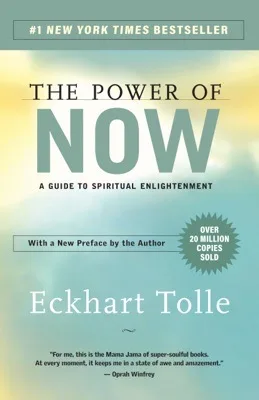
by Eckhart Tolle · 1997
SoulSpiritTolle teaches that most suffering comes not from life but from a mind that lives in the past and the future. The ideas below, and where your attention went today instead of here.
What was going on the last time you lost your calm this week?
From the book · 6 ideas
Tolle has a name for it.
Short summary
The Power of Now in brief
Tolle argues that most people are so identified with the stream of thought in their heads that they take it for who they are, and that this, more than their circumstances, is the root of their unhappiness. The thinking mind drags attention into the past and the future, stores old emotional pain he calls the pain-body, and turns plain situations into problems. His way out is presence: watching thoughts and moods instead of being run by them, feeling the body from within, and meeting what is already happening without inner resistance. What he asks for is a habit of attention, catching where the mind has gone many times over an ordinary day.
A spiritual teaching, not a study: Tolle writes from his own experience and from sayings of Jesus and the Buddha. Time’s 2003 review found it steeped in mysticism and of little use to readers wanting practical advice.
Six ideas, in Tolle’s order
Each idea is named and stated, not worked through. Under each is a question about your own day that no page can answer.
The thinker and the watcher
Tolle separates the voice in the head from the awareness that can hear it. You are the watcher, not the thinker, he argues: the mind is an excellent tool, but in most people it has taken over and runs its user.
Only your day can answer
What did the voice in your head say about the last stranger you passed?
The pain-body
Pain that isn’t met with presence, Tolle says, leaves a residue that merges with older pain into the pain-body, an energy field lodged in mind and body. It flares up as resentment, impatience or a dark mood, and loosens its hold once it is watched.
Only your day can answer
When did a small thing get a reaction from you that felt older than the moment itself?
Psychological time
Tolle calls the mind’s constant traffic with the past and the future psychological time. It hides the present, the only place life has ever happened, and most of what feels like a problem lives there, in thought about what was or might be.
Only your day can answer
How many times today did you rehearse a conversation that hasn’t happened yet?
Leave, change or accept
When the here and now feels intolerable, Tolle sees three options: leave the situation, change it, or accept it completely. Choosing one of the three, he argues, is what keeps a hard situation from producing what he calls psychic pollution.
Only your day can answer
What did you complain about more than once today without leaving it, changing it or accepting it?
The inner body
Tolle describes an inner body, a field of aliveness that can be felt from within. Busy thinking covers it up, he argues, and so does old emotional pain, which has to dissolve before the inner body can be reached.
Only your day can answer
In the middle of your last tense conversation, what could you feel in your hands?
Surrender without passivity
Tolle ends the book on surrender, which he describes as inner nonresistance rather than doing nothing. Like a martial artist who yields to an opponent’s force, someone who has stopped resisting still acts, but from presence instead of reaction.
Only your day can answer
What did you brace against today that was already happening, and what did bracing change?
The part no summary can do
Tolle can name the pain-body and the voice in the head. When they take over in your own day, and what changes the moment you catch them at it, no teacher can see from outside.
In Actium, The Power of Now becomes one chapter a day, in the order Tolle wrote it, and each chapter becomes 2–3 small tasks written from your goals and your answers to up to five short questions. Two readers get different tasks, which is why yours aren’t on this page: they don’t exist yet.
Day 1 · when you start
Two quick tasks, starting with a short note
Day 2
Opens tomorrow morning.
Miss a day and your chapter simply waits.

Free to download · 15 days of everything, no card
Some features require a subscription · iPhone only
Read next
More books picked for “Reduce stress and increase inner stability”, and books that train the same stats.
- 10% HappierDan HarrisWhich push from your inner voice today backfired?
- Why We SleepMatthew WalkerAfter your shortest night, what small thing set you off?
- BreathJames NestorWhich nostril is doing most of your breathing right now?
- Peaceful Parent, Happy KidsLaura MarkhamWhat were you in the middle of when your voice last rose?


Get Actium
Start The Power of Now in Actium
Pick The Power of Now in the app and answer up to five short questions about it and your life. Actium builds your first chapter while you watch, starting with a short note, and every task you finish adds points to Body, Mind, Soul or Spirit.
Free to download · 15 days of everything, no card
Some features require a subscription · iPhone only