How to apply Why We Sleep
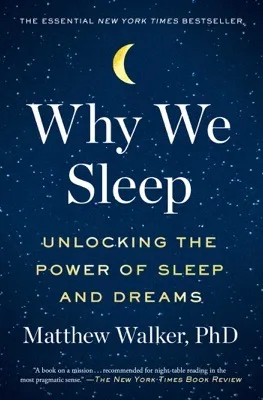
by Matthew Walker · 2017
BodyMindWalker writes about sleep as the base that memory, mood and health are built on, not as idle time. From adenosine to dreaming, and what your last few nights did to your days.
What showed up the day after your last short night?
From the book · 6 ideas
Walker has a name for it.
Short summary
Why We Sleep in brief
Walker argues that sleep is not lost time but an active process the brain and body rely on, and that modern life routinely cuts it short. He begins with the two forces that time sleep, an internal 24-hour clock and a pressure to sleep that builds the longer you are awake, then follows sleep into learning, memory, mood and physical health. A section on dreaming makes the case that REM sleep helps the mind process emotion. The last part turns to what keeps people up, from evening screens and alcohol to work schedules, and to how medicine, schools and workplaces treat sleep. The case he makes is for protecting sleep on purpose, not giving it whatever time is left over.
In 2019 the researcher Alexey Guzey documented errors in the book, such as crediting the WHO with declaring a sleep-loss epidemic. Walker replied point by point, conceded some and published corrections.
This page is not medical advice, and neither is Actium. For a health concern, talk to a doctor.
Six ideas, in Walker’s order
Each idea is named and stated, not worked through. Under each is a question about your own day that no page can answer.
Sleep pressure
Walker explains that a chemical called adenosine builds up in the brain the longer you are awake, and that this sleep pressure is what makes you drowsy by night. Caffeine interferes with that signal, and he puts its half-life at about six hours.
Only your day can answer
Tonight, how many hours after your last coffee or tea does real sleepiness finally arrive?
Sleep before and after learning
Walker argues that sleep works on both sides of learning: it readies the brain to take in new facts, then locks in what was practiced. In his lab, sleep deprivation cut the ability to form new memories by about 40 percent.
Only your day can answer
Which skill you practiced this week was better the next morning than when you stopped?
The emotional brain without sleep
In Walker’s studies, sleep loss made the amygdala, a hub of strong emotion, react about 60 percent more strongly, while the prefrontal regions that usually keep it in check lost their hold. The underslept brain, he argues, overreacts.
Only your day can answer
After your shortest night this week, what small thing set you off that normally wouldn’t?
Overnight therapy
Walker calls dreaming overnight therapy. During REM sleep, he argues, the brain revisits the day’s emotional memories and keeps what happened while softening the charge it first carried, so hard moments feel less raw after a night’s sleep.
Only your day can answer
Which thing that stung yesterday feels smaller this morning, and which one still has its edge?
The iPad at bedtime
Walker describes a study in which an hour of reading on an iPad before bed, instead of a printed book, cut the sleep-timing hormone melatonin by about half, delayed its peak by about three hours and reduced REM sleep.
Only your day can answer
How many minutes pass tonight between putting down your last screen and closing your eyes?
Regularity
Walker puts regularity first in his advice: going to bed and waking at the same times every day, weekends included. Sleeping late on weekends and dragging the body clock back on Sunday night, he argues, is like flying across a continent every week.
Only your day can answer
How far apart were your earliest and latest wake-up times over the past seven days?
The part no summary can do
Walker can explain what adenosine, REM sleep and a lit screen do to a night. Only your own evenings and mornings can show which of them is quietly shaping yours.
In Actium, Why We Sleep becomes one chapter a day, in the order Walker wrote it, and each chapter becomes 2–3 small tasks written from your goals and your answers to up to five short questions. Two readers get different tasks, which is why yours aren’t on this page: they don’t exist yet.
Day 1 · when you start
Two quick tasks, starting with a short note
Day 2
Opens tomorrow morning.
Miss a day and your chapter simply waits.

Free to download · 15 days of everything, no card
Some features require a subscription · iPhone only
Read next
More books picked for “Reduce stress and increase inner stability”, and books that train the same stats.
- The Power of NowEckhart TolleWhich small thing today got a reaction older than itself?
- 10% HappierDan HarrisWhich push from your inner voice today backfired?
- BreathJames NestorWhich nostril is doing most of your breathing right now?
- SparkJohn J. Ratey and Eric HagermanHow long before your sharpest thinking did you last move?
Get Actium
Start Why We Sleep in Actium
Pick Why We Sleep in the app and answer up to five short questions about it and your life. Actium builds your first chapter while you watch, starting with a short note, and every task you finish adds points to Body, Mind, Soul or Spirit.
Free to download · 15 days of everything, no card
Some features require a subscription · iPhone only