How to practice Meditations
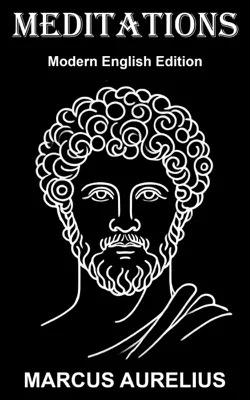
by Marcus Aurelius · c. 170–180 CE
MindSoulIn notes meant only for himself, Marcus keeps coming back to one claim: what troubles us is mostly the verdict we add. Six of his themes, and the verdicts you added to your day.
What knocked you off balance most often this week?
From the book · 6 themes
Marcus has a name for it.
Short summary
Meditations in brief
Meditations is a set of private notes the Roman emperor Marcus Aurelius wrote in Greek, probably in the 170s while leading his armies in central Europe. It was almost certainly not meant for readers, so it argues with no one and reminds instead. Its twelve books open with thanks to the people who raised and taught him, then circle back to a few themes again and again. Among them: the hurt in an event lies mostly in the verdict we add to it; difficult people are still kin we were made to work with; obstacles can become material; and fame shrinks when seen from far enough away.
Not a study or a treatise: private notes in which Marcus rehearses Stoic teaching, much of it from Epictetus, so the same themes return rather than build one argument.
Six themes, in the order Marcus wrote them
Each theme is named and stated, not worked through. Under each is a question about your own day that no page can answer.
Debts to family and teachers
Book 1 is a list of thanks: what Marcus took from his grandfather, his mother, his teachers and his adoptive father. From Rusticus alone he credits plainer letters, a readiness to forgive, and his introduction to the discourses of Epictetus.
Only your day can answer
Whose way of handling things did you borrow yesterday without thinking of them?
Made to work together
Book 2 opens with Marcus bracing himself, first thing in the morning, for the rude and thankless people ahead. They act from not knowing good from bad, he reasons, and they are still his kin, made to work with him like two hands.
Only your day can answer
Who rubbed you the wrong way today, and what were the two of you there to get done together?
The retreat into yourself
People long for a house in the country or a stretch of coast to get away, Marcus notes in Book 4, when the quietest place to withdraw to is one’s own mind, stocked with a few short principles that send you back refreshed.
Only your day can answer
When you slipped away from things today, where did you go, and how long did the calm last?
Hindrances turned to use
In Book 5 Marcus grants that other people can get in the way of what he means to do. They cannot reach his intentions, he argues, because the mind adjusts its aim and turns whatever blocks it into something to act on.
Only your day can answer
What blocked your plans this week, and what did it leave you to work with?
The judgment, not the thing
Marcus keeps drawing one line in Book 8: on one side what happened, on the other the verdict he adds about it. The hurt, he argues, lives in the verdict, and the verdict is the one part he can change.
Only your day can answer
In today’s biggest upset, where did what happened end and your verdict on it begin?
The view from above
In Books 9 and 12 Marcus pictures himself lifted high above the earth, looking down on crowds, ceremonies, voyages, births and deaths. From that height, many have never heard his name, and those praising him now will soon find fault.
Only your day can answer
Who besides you even noticed the awkward moment from this week that still makes you wince?
The part no summary can do
Marcus can tell you what he reminded himself of before facing difficult people. Which of today’s upsets came from events, and which from your own verdicts, he had to sort out for himself, and so do you.
In Actium, Meditations becomes one chapter a day, in the order Marcus wrote it, and each chapter becomes 2–3 small tasks written from your goals and your answers to up to five short questions. Two readers get different tasks, which is why yours aren’t on this page: they don’t exist yet.
Day 1 · when you start
Two quick tasks, starting with a short note
Day 2
Opens tomorrow morning.
Miss a day and your chapter simply waits.

Free to download · 15 days of everything, no card
Some features require a subscription · iPhone only
Read next
More books picked for “Overall grow as a person”, and books that train the same stats.
- Man’s Search for MeaningViktor E. FranklWhat did today ask of you that no one else could give?
- The 7 Habits of Highly Effective PeopleStephen R. CoveyWhat got bumped today by something that only felt urgent?
- The AlchemistPaulo CoelhoWhat did your someday plan lose to today?
- The Whole-Brain ChildDaniel J. Siegel and Tina Payne BrysonWhat did you say first when your child last fell apart?
Get Actium
Start Meditations in Actium
Pick Meditations in the app and answer up to five short questions about it and your life. Actium builds your first chapter while you watch, starting with a short note, and every task you finish adds points to Body, Mind, Soul or Spirit.
Free to download · 15 days of everything, no card
Some features require a subscription · iPhone only