How to apply The Whole-Brain Child
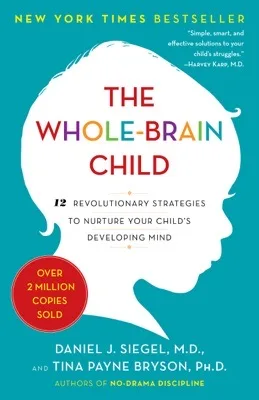
by Daniel J. Siegel and Tina Payne Bryson · 2011
MindSoulSiegel and Bryson argue that a child’s meltdowns come from a brain still under construction, and that each upset is a chance to help it work as a whole. Six ideas, six questions.
Which comes closest to your child’s hardest moment this week?
From the book · 6 ideas
Siegel and Bryson have a name for it.
Short summary
The Whole-Brain Child in brief
Siegel and Bryson argue that a child’s brain does best when its parts work together, a state they call integration. They give parents two pictures of it: a logical left brain beside an emotional right brain, and a downstairs brain that works from birth beneath an upstairs brain for decisions and emotional balance, which is under construction until the mid-twenties. In young children the right brain tends to rule, and in heated moments the downstairs brain can hijack the upstairs. Integration keeps a child in what the authors call the river of well-being, between a bank of chaos and a bank of rigidity. In their view, an outburst is a chance to connect first and teach second.
Six ideas, in Siegel and Bryson’s order
Each idea is named and stated, not worked through. Under each is a question about your own day that no page can answer.
Connect and redirect
In their first strategy, Siegel and Bryson argue that an upset child needs emotional connection first, right brain to right brain. Lessons and discipline, which call on the logical left brain, wait until the child is back in control and receptive.
Only your day can answer
What did your first sentence sound like the last time your child fell apart?
Name it to tame it
When big right-brain feelings rage, Siegel and Bryson suggest helping a child tell the story of what upset them. Telling it brings in the left brain to make sense of the experience, and the child feels more in control.
Only your day can answer
What upset from this week is your child still carrying around untold?
Upstairs and downstairs brain
Siegel and Bryson describe a downstairs brain working from birth and an upstairs brain, for decisions and balance, under construction into the mid-twenties. In strong emotion the downstairs can hijack it, so they favor engaging a child’s thinking, with questions or negotiation, over pulling rank.
Only your day can answer
Which of your sentences today got your child thinking, and which started a showdown?
Make the implicit explicit
The authors explain that implicit memories can let past experiences affect a child in debilitating ways. Narrating the event makes it explicit, and an inner remote that can pause, rewind and fast-forward lets the child control how much of the story to view.
Only your day can answer
What small thing set off your child’s biggest reaction this week, and what older moment might it echo?
Clouds of emotion
Feelings pass, Siegel and Bryson remind parents: fear, frustration and loneliness are temporary states, not lasting traits. Their acronym SIFT has a child notice the sensations, images, feelings and thoughts inside, since what goes unnoticed can’t be understood or changed.
Only your day can answer
How long did your child’s worst mood today actually last, from start to finish?
Connect through conflict
Siegel and Bryson argue that the brain is wired for we, so a child’s conflicts are practice, not just trouble to stop: chances to see another person’s view, read faces and tone, and make amends.
Only your day can answer
In your child’s last squabble, how much of the other child’s side could they tell you?
The part no summary can do
Siegel and Bryson can explain why an upset child stops hearing reason. What actually reaches your own child in that moment, and what your first words sound like, you can only hear for yourself, in the middle of it.
In Actium, The Whole-Brain Child becomes one chapter a day, in the order Siegel and Bryson wrote it, and each chapter becomes 2–3 small tasks written from your goals and your answers to up to five short questions. Two readers get different tasks, which is why yours aren’t on this page: they don’t exist yet.
Day 1 · when you start
Two quick tasks, starting with a short note
Day 2
Opens tomorrow morning.
Miss a day and your chapter simply waits.

Free to download · 15 days of everything, no card
Some features require a subscription · iPhone only
About Daniel J. Siegel and Tina Payne Bryson
- Daniel J. Siegelborn 1957
- First published2011
- Also wroteParenting from the Inside Out (2003, with Mary Hartzell), Mindsight (2010), No-Drama Discipline (2014, with Tina Payne Bryson)
Read next
More books picked for “Be a better parent”, and books that train the same stats.
- How to Talk So Kids Will Listen & Listen So Kids Will TalkAdele Faber and Elaine MazlishWhat did you say the third time you asked your kid today?
- Peaceful Parent, Happy KidsLaura MarkhamWhat were you in the middle of when your voice last rose?
- No-Drama DisciplineDaniel J. Siegel and Tina Payne BrysonWhat did your last correction teach besides stopping?
- MeditationsMarcus AureliusWhat happened today before you decided it was bad?

Get Actium
Start The Whole-Brain Child in Actium
Pick The Whole-Brain Child in the app and answer up to five short questions about it and your life. Actium builds your first chapter while you watch, starting with a short note, and every task you finish adds points to Body, Mind, Soul or Spirit.
Free to download · 15 days of everything, no card
Some features require a subscription · iPhone only