How to apply Getting Things Done
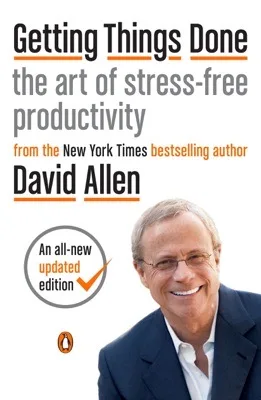
by David Allen · 2001
MindSpiritAllen’s starting point: a commitment kept only in your head nags at the wrong moment until it is decided. Below, his method in six ideas, and the open loops riding around in yours.
What’s keeping the thing on your mind most this week from moving?
From the book · 6 ideas
Allen has a name for it.
Short summary
Getting Things Done in brief
Allen argues that much of the strain of a busy life comes from tracking commitments in your head, where they nag without ever being decided. His method moves all of them into an outside system in five stages: capture what has your attention, clarify what each item means and what its next action is, organize the results, reflect on them in a weekly review, and engage with the work. Projects get the same treatment, planned the way he says the mind already plans. What lasts is a habit more than a set of tools: deciding what done means and what the very next step is, then trusting the lists enough to stop carrying them in your head.
Allen built GTD from decades of client work, not experiments. Two Brussels researchers later argued that cognitive science backs it; Cal Newport has written that it helps people cope with overload but can’t reduce it.
Six ideas, in Allen’s order
Each idea is named and stated, not worked through. Under each is a question about your own day that no page can answer.
Open loops
Allen calls each commitment kept only in your head an open loop. He argues that the mind makes a poor reminder system, raising them at moments when nothing can be done, and aims for mind like water, borrowed from the martial arts.
Only your day can answer
What unfinished thing crossed your mind today at a moment you could do nothing about it?
The natural planning model
Allen’s natural planning model names five phases the mind runs through on its own when it plans anything: purpose, a picture of the outcome, brainstorming, organizing and a next action. He uses the same five phases to get projects under way.
Only your day can answer
The last time you planned something with others, how long before anyone said what finished would look like?
The mind sweep
Allen’s capture step gathers everything that has your attention, large or small, work or personal, into a few in-trays, and a mind sweep empties what he calls psychic RAM. Anything left out, he argues, keeps you from trusting the lists.
Only your day can answer
How many places are holding a reminder for you right now, counting your own head?
The two-minute rule
Clarifying starts by deciding whether an item needs action at all. If not, Allen sends it to the trash, a someday/maybe list or reference; if it does and the next action takes under two minutes, doing it now costs less than tracking it.
Only your day can answer
Which two-minute jobs in your inbox right now have been waiting longer than a week?
The weekly review
Allen treats the weekly review as what keeps the whole system current: at least once a week, every list, inbox and calendar is brought up to date again. Without it, he says, the lists drift out of date and the habit falls apart fast.
Only your day can answer
Which commitment from last week has nobody, including you, looked at since you made it?
The next-action decision
Allen argues that most stalled commitments lack one decision: the very next physical, visible action. A list entry like Mom or bank, an example he has given, does nothing until it becomes a step such as calling a sister about a birthday plan.
Only your day can answer
Which line on your to-do list has sat untouched longest, and what verb does it start with?
The part no summary can do
Allen has a name for the task that keeps tugging at you: an open loop. Which commitments still live in your head, and what the next step on each one really is, he can’t know from here.
In Actium, Getting Things Done becomes one chapter a day, in the order Allen wrote it, and each chapter becomes 2–3 small tasks written from your goals and your answers to up to five short questions. Two readers get different tasks, which is why yours aren’t on this page: they don’t exist yet.
Day 1 · when you start
Two quick tasks, starting with a short note
Day 2
Opens tomorrow morning.
Miss a day and your chapter simply waits.

Free to download · 15 days of everything, no card
Some features require a subscription · iPhone only
Read next
More books picked for “Increase productivity”, and books that train the same stats.
- Atomic HabitsJames ClearWhich object in this room decides what you do next?
- Deep WorkCal NewportWhen was your last full hour without a glance at messages?
- The One ThingGary Keller and Jay PapasanWhat decided which task came first this morning?
- The Lean StartupEric RiesWhat did someone actually do with your work this week?
Get Actium
Start Getting Things Done in Actium
Pick Getting Things Done in the app and answer up to five short questions about it and your life. Actium builds your first chapter while you watch, starting with a short note, and every task you finish adds points to Body, Mind, Soul or Spirit.
Free to download · 15 days of everything, no card
Some features require a subscription · iPhone only